268 Bibles added to the Timeline
While doing research for a book, I started to realize there are many consequential historical translations of the Bible. To capture those translations and share them on the Exchanged.store timeline, I used ChatGPT to build a spreadsheet of distinct translations, with particular emphasis on the precursors to the modern English Bible. A translation was treated as unique when it represented an independent translation, a substantial revision, or a materially distinct textual tradition—not simply a reprint, spelling update, or foreign-language edition of an existing translation.
The chronology reaches back to the earliest recorded translation traditions and includes significant partial translations when they played an important historical role. Non-English translations were included selectively, when they represented a unique milestone, preserved an important ancient textual tradition, or directly influenced later English translations. Paraphrases were excluded.
It distinguishes the approximate date of translation or earliest attestation from the date of the first surviving witness, the first printed portion, and the first complete Bible.
Once created, the spreadsheet was formatted for ingestion by a custom import function built for the timeline. After the entries were added to the database, a description for each translation was drafted by AI (Claude Opus), based on the research compiled in the ChatGPT-built spreadsheet.
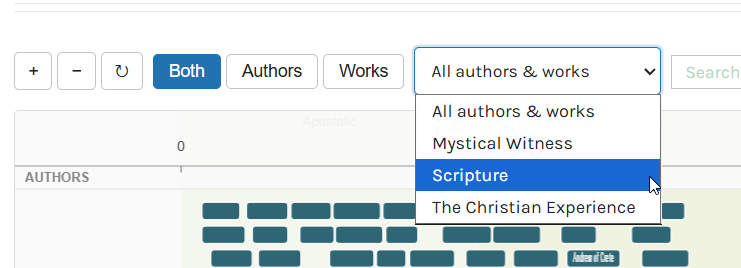
I decided to treat Bibles (Scripture) as works without a stated author. Attribution, when known, was placed into a byline field on the work record itself, displayed prominently as the subtitle. A dedicated “Scripture” work type was added to categorize all Bibles and smaller works of Scripture, and I created a “Scripture” collection for easy selection of all Bible translations.