
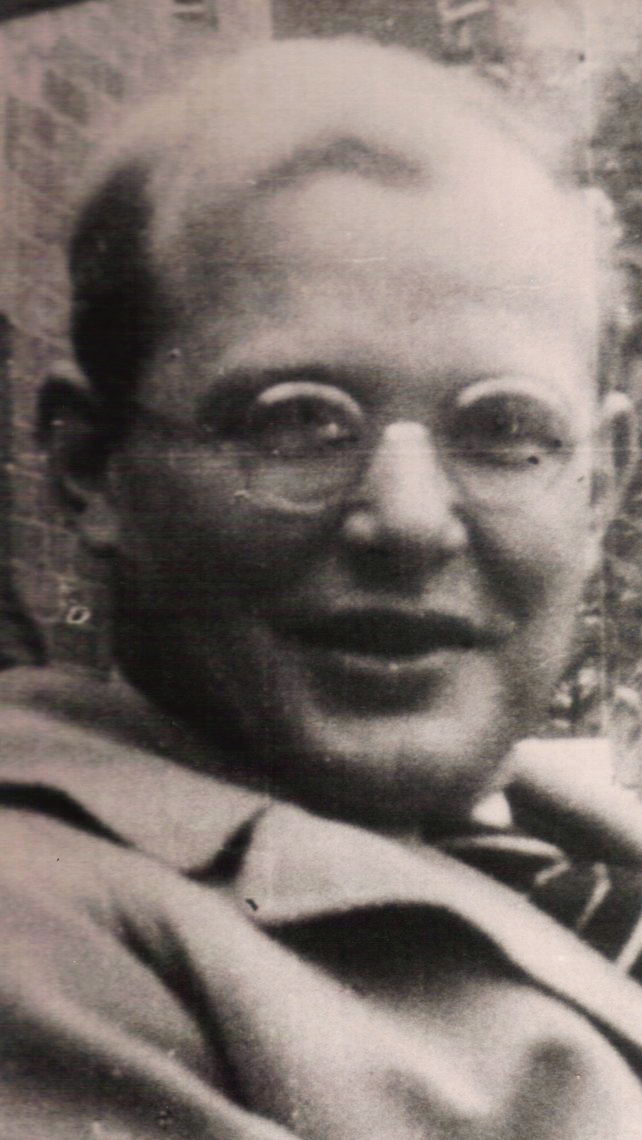
Dietrich Bonhoeffer was born on February 4, 1906, in Breslau, Prussia, into a family where intellectual distinction was assumed rather than pursued. His father Karl was a prominent psychiatrist and neurologist; his mother Paula came from the Hase family, which had produced generations of theologians, historians, and church leaders. The household was cultured, skeptical of easy religious sentiment, and committed to serious engagement with ideas. Dietrich was one of eight children, and the family's conversations ranged across philosophy, politics, literature, and music with equal facility. When he announced at fourteen his intention to study theology, his older brothers suggested he was wasting his considerable intellect on a dying institution. The church, they argued, was a poor, feeble, boring petty-bourgeois institution. His reply was characteristic: "In that case, I shall reform it."
Bonhoeffer completed his doctoral dissertation "Sanctorum Communio" at twenty-one under Reinhold Seeberg at the University of Berlin, followed by his habilitation "Act and Being" at twenty-four. Both works engaged the relationship between Christ, church, and individual existence with a philosophical rigor that impressed even Karl Barth, with whom Bonhoeffer would maintain a complex theological friendship. A year at Union Theological Seminary in New York in 1930-31 exposed him to American Protestant liberalism, which he found theologically thin, but also to African American Christianity in Harlem, which revealed to him a gospel he had not encountered in German academic circles. He returned to Germany as a lecturer at Berlin, but his academic career was already being overtaken by the political crisis engulfing the German church.
When the Nazi-aligned German Christians gained control of the official church in 1933, Bonhoeffer joined the founding of the Confessing Church, helping to draft the Barmen Declaration that rejected the intrusion of Nazi ideology into Christian doctrine. In 1935 he accepted leadership of an illegal seminary at Finkenwalde, where he trained pastors for the Confessing Church until the Gestapo closed it in 1937. The Finkenwalde years produced some of his most influential writing and refined his understanding of Christian community, discipleship, and the cost of following Christ in a world hostile to the gospel. The community practiced a rhythm of prayer, study, and common life that Bonhoeffer saw as essential to pastoral formation. Students later recalled the intensity of both the theological work and the growing awareness that their resistance to the regime might require them to pay with their lives.
Bonhoeffer's opposition to Nazism moved beyond ecclesial resistance to political conspiracy. Through his brother-in-law Hans von Dohnanyi, he became connected to a circle of military and civilian officials plotting Hitler's assassination. The move from pastor to conspirator troubled him deeply — he wrote to Reinhold Niebuhr that he had no right to participate in Germany's reconstruction after the war if he did not share in the guilt of removing Hitler. On April 5, 1943, he was arrested and imprisoned, first at Tegel prison in Berlin, then at Buchenwald, and finally at Flossenbürg concentration camp. He was executed by hanging on April 9, 1945, just days before the camp's liberation.
His Writing and Its Influence
Bonhoeffer's major works emerged from the intersection of rigorous theological training and the crisis of the German church under Nazism. "The Cost of Discipleship," published in 1937, distinguished between what he called "cheap grace" — the doctrine of forgiveness without repentance, grace without discipleship — and "costly grace," which demands that a person follow Christ. The book's opening line became one of the most quoted statements in twentieth-century Christian literature: "Cheap grace is the deadly enemy of our church." His meditation on the Sermon on the Mount argued that Jesus's teachings were not impossible ideals but concrete commands for Christian living, a reading that put him at odds with much of Lutheran tradition.
"Life Together," written in 1938 after the closure of Finkenwalde, reflected on the nature of Christian community based on his experience of the seminary's common life. The book examined both the gift and the burden of life with other Christians, warning against both the romantic idealization of community and the cynicism that abandons it entirely. Bonhoeffer insisted that Christian community exists only through and for Jesus Christ, not as an expression of human affinity or shared interests.
His unfinished "Ethics," worked on during his involvement in the conspiracy, addressed the problem of Christian action in a world where all choices involve guilt. Rather than seeking moral purity, Bonhoeffer argued for "responsible action" that accepts the burden of guilt for the sake of others. The fragmentary "Letters and Papers from Prison" revealed his wrestling with what he called "religionless Christianity" and the church's role in a "world come of age." These late writings, often cryptic and incomplete, have generated extensive debate about Bonhoeffer's theological development and his relationship to traditional Christianity.
Bonhoeffer's influence extends far beyond academic theology. His writings became foundational for liberation theology in Latin America, the civil rights movement in the United States, and various forms of political theology worldwide. The image of the pastor-martyr who died resisting tyranny has sometimes overshadowed the complexity of his theological work, but both dimensions remain essential to understanding his continuing significance.
Who should read Bonhoeffer: Christians grappling with the relationship between faith and political responsibility, particularly those in contexts where comfortable Christianity needs to be challenged by the demands of discipleship. He is essential for readers who want to understand how serious theology engages serious historical crisis. He is not for those seeking devotional comfort or simple moral guidance — his work demands wrestling with the cost of Christian commitment in a world where following Christ may require choices that traditional piety cannot easily resolve.
Works by Dietrich Bonhoeffer
- Act and Being 1931
- Cost of Discipleship 1937
- Life Together 1939
- Ethics 1940 – 1943